
Share
In a world obsessed with fleeting stainless steel finishes and temporary ceramic coatings, there is one material that consistently anchors the modern kitchen in history and heritage: brass kitchenware. Known as pital ke bartan in India, these aren't just tools; they are enduring treasures that defy disposable culture.
At Bulkysanta, we view brass as the ultimate statement of the Conscious Choice: functional strength blended with incomparable beauty. Here is why brass kitchen utensils and serving pieces are built to outlast every passing trend.
Functional Strength and Timeless Longevity
The secret to brass's staying power lies in its composition—an alloy of copper and zinc. This combination gives it exceptional functional strength and resistance to corrosion, allowing it to withstand the rigours of daily use for generations.
Unlike materials that scratch easily or leach chemicals, solid brass kitchenware is an investment in longevity. It does not merely survive; it ages with grace. Over time, the surface develops a unique patina, a rich, dark finish that is highly prized and tells the story of every meal prepared and shared. This patina isn't something to fight; it's a testament to the life of the kitchen itself.
The Artisan's Touch: Shaping Form and Utility
What separates true heirloom brass kitchen utensils from factory replicas is the hand of the artisan. Our pieces are not molded; they are shaped.
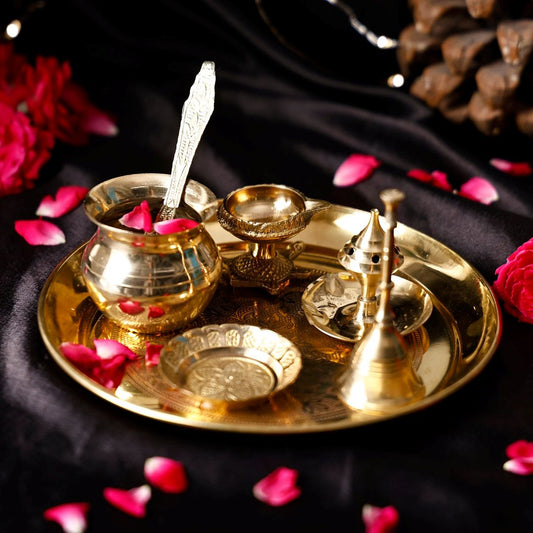
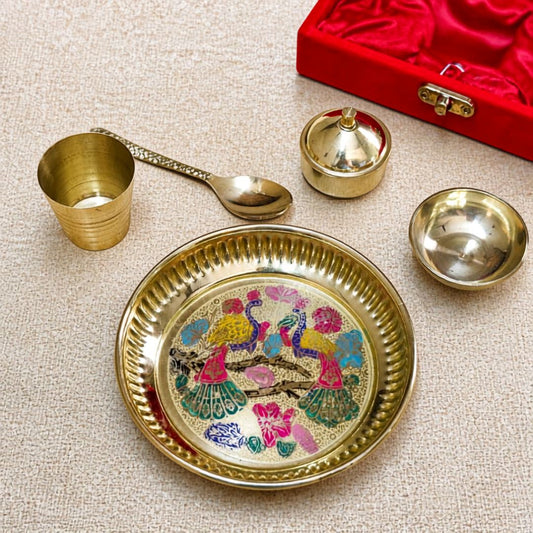
Artisans blend traditional knowledge with an intuitive understanding of form and utility. The subtle hammering on the surface of a Brass Handi or a Brass Kadhai doesn't just look beautiful—it increases the metal's density and strength for superior heat retention. The wide rim of the Brass Dinner Thali. Even the design of every Brass Spatula and Brass Serving Spoon is meticulously crafted to feel perfectly balanced and comfortable in your hand, while a Brass Glass is shaped for an ideal, cooling grip.
This fusion of aesthetic and function—where every curve and texture serves a purpose—is the essence of preserving traditional craftsmanship.
Behind the Scenes: A Lasting Process
The process of crafting enduring brass kitchenware is a commitment to quality over speed. It involves multiple steps where the artisan’s skill is paramount:
-
Casting or Sheet Shaping: Heating the metal to just the right temperature.
-
Hammering (Thokai): The controlled, repetitive striking that hardens the metal, removing residual porosity and improving its structure.
-
Lathing and Polishing: Precisely shaping the vessel and giving it a high sheen.
This intensive, hands-on method ensures the longevity of every piece, guaranteeing you receive true pital ke bartan that are worthy of becoming family heirlooms.
Mixing Brass with Modern Kitchen Setups
Integrating traditional brass kitchenware into a modern, minimalist kitchen creates a powerful visual contrast. Brass provides the necessary warmth, soul, and color to prevent a contemporary space from feeling cold or clinical.
-
Elevating the Meal: Transform a simple dinner into a thoughtful ritual by using your serving and dining pieces. Use a glowing Brass Handi or Brass Kadhai as a stunning serving piece for the main course, contrasting beautifully against neutral ceramics. Offer individual portions in elegant Brass Katori or serve water in a sleek Brass Glass for a cooling, traditional touch. For a full, rich aesthetic statement, set the table with a complete Brass Dinner Thali
-
Functional Accents: Don't hide these treasures in a drawer. Display your Brass Spatulas and Brass Serving Spoons in a simple marble or ceramic utensil holder. The polished metal provides an elegant, warm accent on your countertop that is both useful and beautiful, constantly reminding you of your Conscious Choice approach to kitchen utility.